Space Waves: Cosmic Art and Imagination
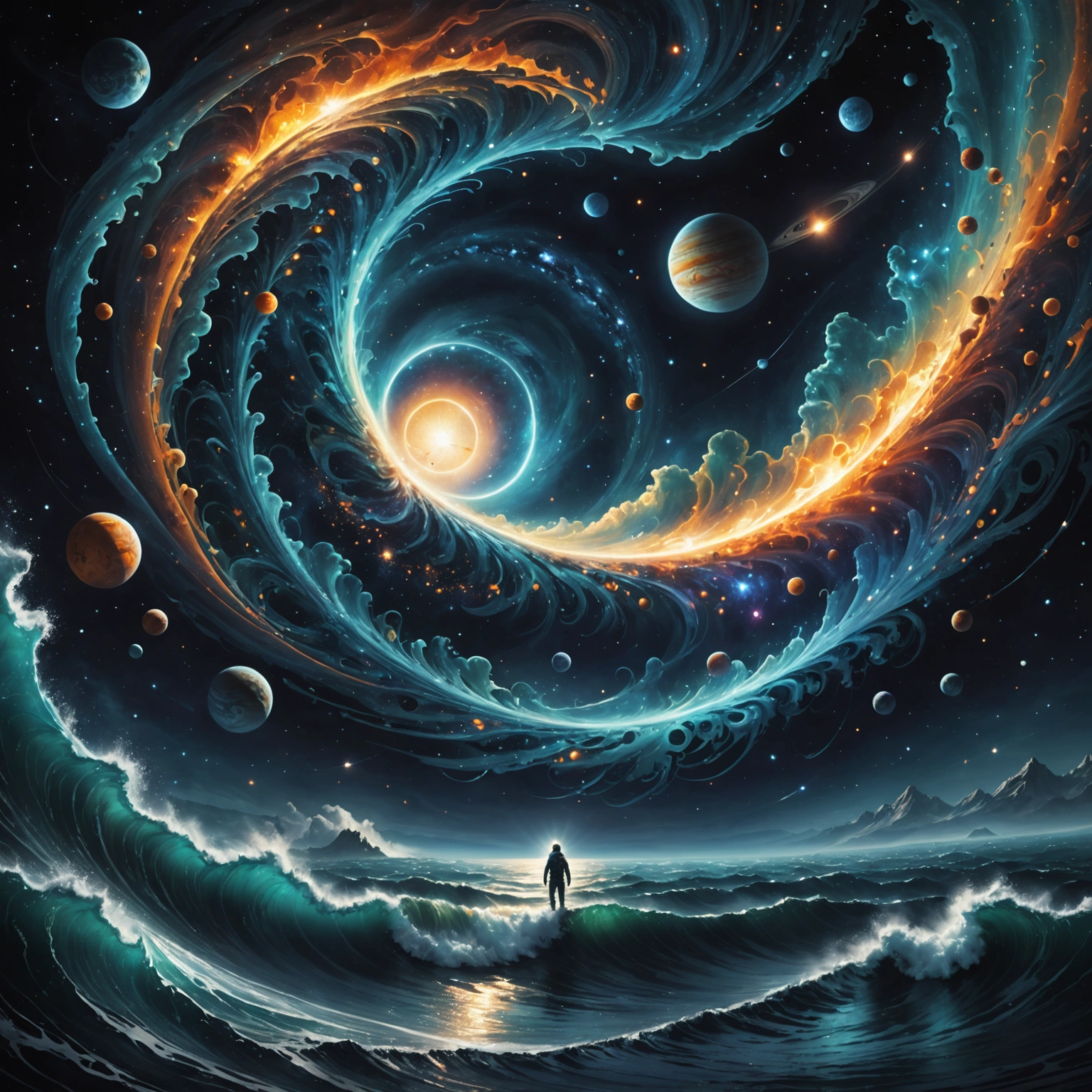
Riding the Invisible Currents of the Universe
Imagine standing on the edge of a vast cosmic ocean. But instead of water, this sea is made up of rippling waves of energy, light, and particles—space waves—that traverse the universe at unimaginable speeds. These ethereal undulations are not just the stuff of astrophysics; they have become a wellspring of inspiration for artists and creators who dare to visualize the unknown. Space waves, with their mysterious ebb and flow, challenge our perception of reality and invite us to explore the cosmos not only through telescopes but also through the brushstrokes and pixels of space art.
Yet, capturing something as intangible as space waves in visual form is no easy feat. How does one translate the silent oscillations of electromagnetic radiation or gravitational waves into something that ignites the imagination? This is where cosmic designs step in—complex, vibrant, and often surreal representations that transform scientific phenomena into artistic narratives. These cosmic designs permeate sci-fi art, pushing the boundaries of creativity and offering a glimpse into what lies beyond our earthly confines.
For those enchanted by the idea of cosmic creativity, the journey is both thrilling and daunting. How can artists keep pace with the ever-evolving discoveries of space science while crafting works that resonate emotionally? Interestingly, this quest parallels other realms where imagination meets opportunity—like finding that elusive free 10 bet no deposit required in kenya, a small yet exciting chance that can spark a larger adventure. In the same way, space waves imagery fuels a spark in the artistic universe, enabling creators to ride currents of cosmic wonder into new territories.
The Language of Space Waves in Artistic Expression
When we talk about space art, it’s more than pretty pictures of stars and planets. It’s an evolving dialogue between science and imagination, where space waves act as a hidden language waiting to be deciphered. Artists interpret these waves—be they radio waves from pulsars, X-rays from black holes, or the faint whispers of gravitational waves—as vibrant patterns and abstract forms. This transformation from data to design invites audiences to feel the pulse of the universe.
Consider the way cosmic designs incorporate the rhythmic undulations of space waves into visual motifs. Swirling nebulae might be rendered with wave-like brush strokes that mimic the flow of electromagnetic radiation. Digital artists simulate wave interference and resonance patterns to create immersive environments that feel alive with cosmic energy. This blending of science and art not only educates but also evokes emotions ranging from awe to introspection.
Why Do Space Waves Captivate Sci-Fi Creators?
- Endless Inspiration: The invisible nature of space waves leaves much to the imagination, providing a blank canvas that is both scientifically grounded and creatively flexible.
- Symbolism of Connection: Waves symbolize communication and energy transfer, themes central to many sci-fi narratives about interstellar travel and alien contact.
- Visual Dynamism: Their flowing, dynamic shapes lend themselves to stunning, kinetic artwork that captures the movement of space itself.
By tapping into these aspects, sci-fi art becomes more than escapism; it becomes a reflection of humanity’s desire to understand and belong to the cosmos. The resulting cosmic designs are thus not just beautiful—they are meaningful.
Charting the Future of Cosmic Creativity
As technology advances, artists gain new tools to bring space waves to life in ways previously unimaginable. Virtual reality, augmented reality, and AI-driven generative art are opening portals to immersive cosmic experiences. Imagine stepping into a 3D space where you can see, hear, and even “feel” the undulations of space waves surrounding you—this is the frontier where art and science converge.
Moreover, the collaboration between scientists and artists is growing stronger. Projects that convert actual space wave data into visual art help demystify complex phenomena and make cosmic science accessible to wider audiences. Through exhibitions, digital platforms, and community events, the ripple effect of cosmic designs continues to expand, inspiring both creators and dreamers alike.
In the chapters ahead, we will delve deeper into how specific types of space waves influence cosmic designs, explore notable artists who have pioneered this genre, and uncover the techniques that bring cosmic art to life. Whether you’re a seasoned space art enthusiast or just curious about how the universe’s invisible waves shape creativity, prepare to embark on a journey that merges the wonders of outer space with the boundless horizons of human imagination.
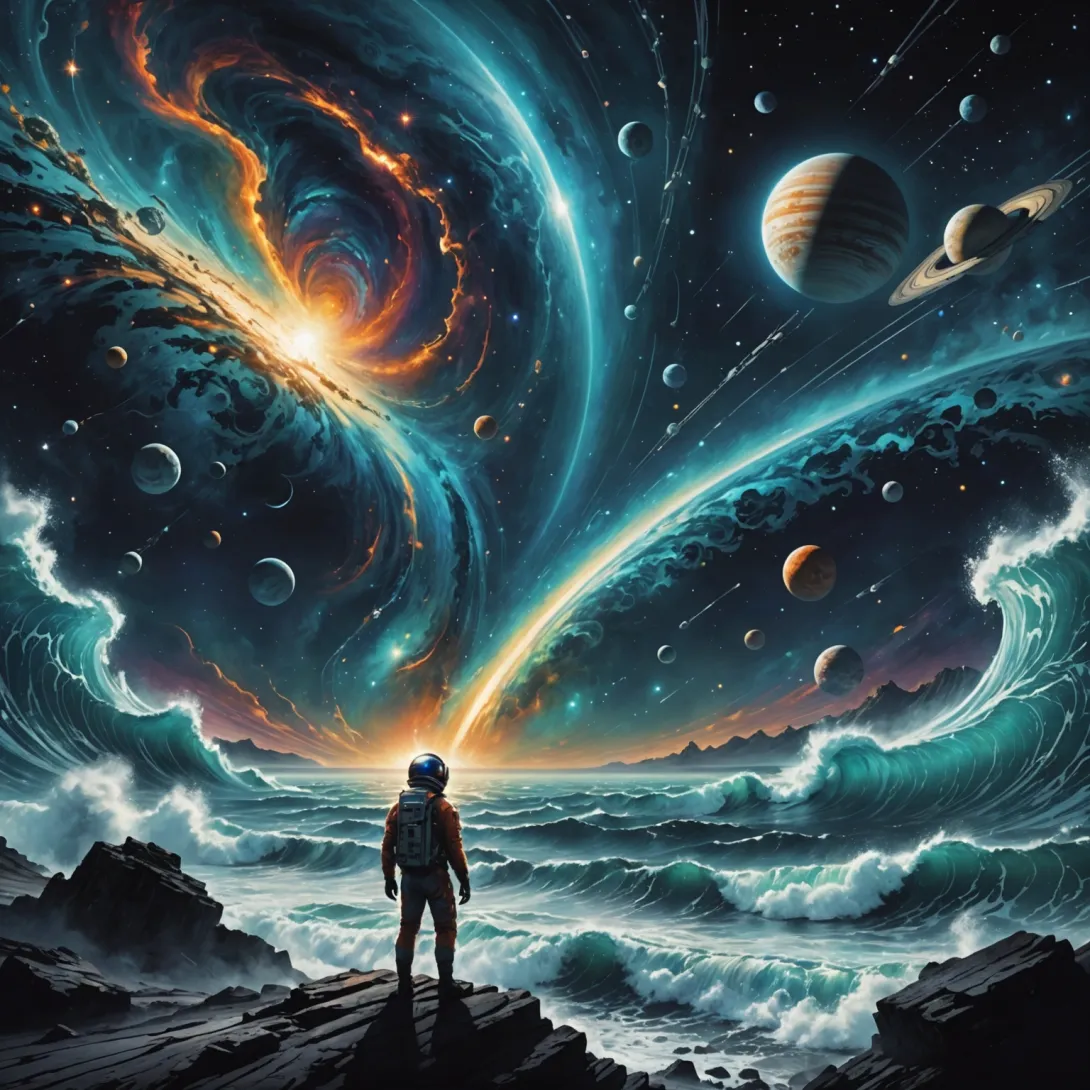
Exploring Space Waves: The Intersection of Cosmic Art and Imagination
What are Space Waves and How Do They Inspire Cosmic Art?
Space waves refer to the dynamic, often invisible, energy patterns that ripple through space, including electromagnetic waves, gravitational waves, and cosmic radiation. These waves, while not visible to the naked eye, inspire a unique form of space art that visualizes the unseen forces shaping our universe.
Artists who focus on space waves translate complex scientific phenomena into vibrant, imaginative visuals that fuel creativity in the realm of cosmic designs. This artistic expression helps bridge the gap between science and imagination, making abstract cosmic concepts accessible and emotionally resonant.
By capturing the essence of space waves, artists create works that evoke the vastness, mystery, and dynamism of the cosmos, often drawing inspiration from astrophysical data, satellite imagery, and theoretical models.
How Does Space Waves Imagery Influence Sci-Fi Art?
Sci-fi art thrives on the imaginative portrayal of futuristic technology and cosmic phenomena, and space waves imagery plays a crucial role in shaping its visual language. Incorporating patterns and aesthetics derived from space waves enhances the authenticity and depth of sci-fi worlds.
For example, sci-fi artists often use:
- Wave-like patterns to represent energy fields or force shields.
- Abstract cosmic textures inspired by cosmic microwave background radiation or gravitational waves to depict alien landscapes or space phenomena.
- Fluctuating light effects that mimic electromagnetic waves to visualize communication signals or space travel mechanisms.
These elements help viewers immerse themselves in speculative universes that feel scientifically plausible yet artistically rich.
What Role Do Cosmic Designs Play in Enhancing Creativity?
Cosmic designs refer to artistic motifs that draw inspiration from celestial bodies, cosmic phenomena, and the vastness of space. These designs often incorporate themes derived from space waves, such as undulating forms, radiating lines, and ethereal color palettes that mimic nebulae and star clusters.
Engaging with cosmic designs stimulates creativity by:
- Encouraging artists to explore the unknown and experiment with abstract representations.
- Bridging art and science, prompting interdisciplinary thinking.
- Inviting audiences to contemplate humanity’s place in the universe, fostering a sense of wonder and curiosity.
Many designers and digital artists use software that simulates waveforms and cosmic phenomena to generate new visual ideas, leading to innovative patterns in everything from fashion to digital interfaces.
Can You Provide Examples of Space Waves in Contemporary Space Art?
Several contemporary artists have successfully incorporated space waves into their work, pushing the boundaries of space art and cosmic creativity:
- Vera Molnár – Though primarily a pioneer of algorithmic art, her explorations into waveforms and patterns echo cosmic rhythms and inspire digital cosmic designs.
- Tomás Saraceno – His installations often evoke cosmic webs and energy waves, blending art, architecture, and astrophysics.
- Astrophotography artists – Many use actual data from NASA and ESA missions capturing electromagnetic waves to create stunning, scientifically accurate cosmic visuals that double as art.
These examples highlight how space waves imagery fuels both artistic innovation and scientific education.
Why Is Understanding Space Waves Important for Artists and Creators?
For artists and creators, understanding space waves is crucial because it:
- Provides authentic scientific grounding that enhances the credibility and depth of their work.
- Enables the creation of visually compelling representations that resonate with audiences familiar with scientific concepts.
- Stimulates interdisciplinary collaboration between artists, scientists, and technologists, leading to richer creative outcomes.
By grasping the science behind space waves, creators can better harness the awe-inspiring qualities of the cosmos, transforming raw data and abstract phenomena into evocative, meaningful art.
How Can Beginners Start Incorporating Space Waves and Cosmic Designs into Their Art?
Beginners interested in space waves and cosmic designs can take several practical steps to integrate these themes into their creative work:
- Study astrophysical concepts: Familiarize yourself with basic astronomy and physics related to wave phenomena in space.
- Use digital tools: Experiment with software like Adobe Photoshop, Illustrator, or specialized fractal and waveform generators to create wave-like patterns and cosmic textures.
- Explore astrophotography: Analyze images from telescopes and space missions to find inspiration for color schemes and patterns.
- Join communities: Engage with online forums and workshops focused on space art to exchange ideas and get feedback.
- Experiment with mixed media: Combine traditional painting with digital effects to simulate space waves and cosmic phenomena.
Through consistent practice and exploration, artists can develop a unique style that reflects the vast creativity inspired by the cosmos.
What Future Trends Are Emerging in Space Waves and Cosmic Art?
The intersection of space waves and cosmic art is evolving rapidly, with several exciting trends on the horizon:
- Augmented and virtual reality: Immersive experiences that allow audiences to "walk through" space wave patterns and cosmic environments.
- AI-generated cosmic designs: Using machine learning algorithms trained on cosmic data to produce new, unexpected visual forms.
- Interactive installations: Artworks that respond in real-time to cosmic data streams, such as solar wind or gravitational wave detections.
- Space mission collaborations: Partnerships between artists and space agencies to create educational and aesthetic content from live space data.
These trends promise to deepen the connection between cosmic science and artistic expression, expanding how we perceive and imagine the universe.


